
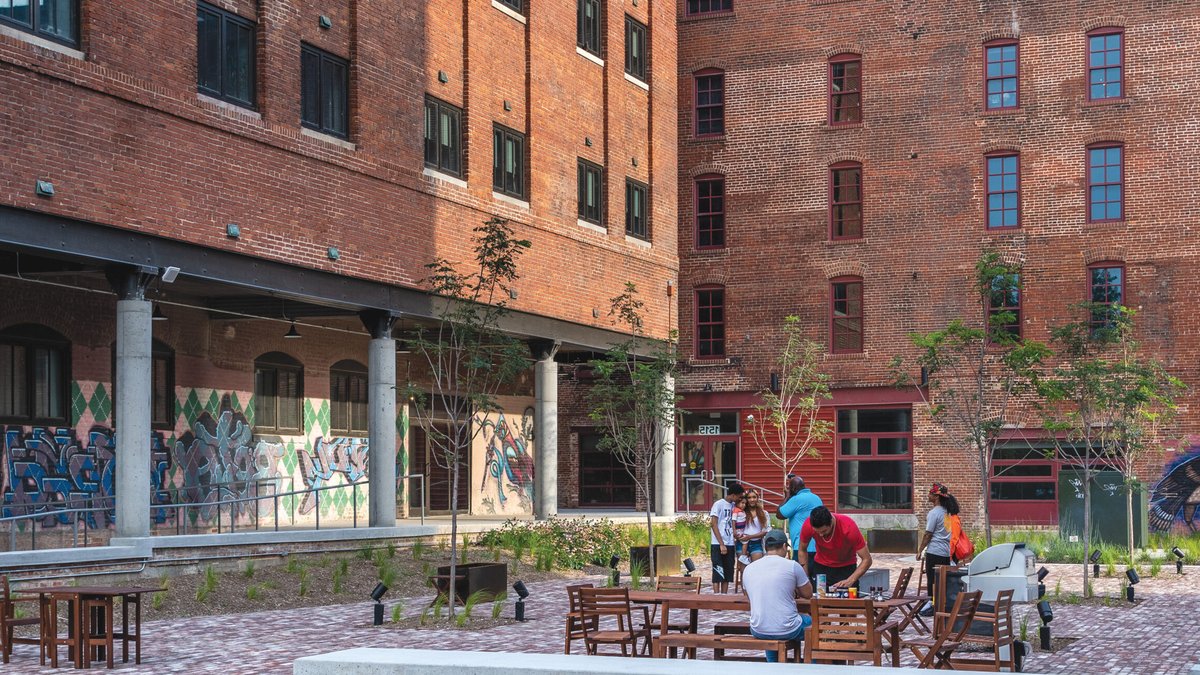
Two architects who spent decades designing new buildings have shifted their focus to those already standing. Billie Faircloth and Lori Ferriss launched Built Buildings Lab in 2024, a nonprofit that treats existing structures as a vital resource in climate action.
The organization has drawn attention quickly. In its first year, it released two reports with the Urban Land Institute, shared research at the 2025 UN Climate Change Conference (COP30), and collaborated with the Climate Heritage Network.
Faircloth and Ferriss point out that architecture has long favored new construction, even as retrofits and renovations now make up 40 to 50 percent of U.S. firms’ billings, according to the AIA Buildings Index. The change reflects a growing recognition: the UN Environment Programme states that global renovation rates must rise tenfold to meet Paris Agreement goals.
“Architects won’t handle every renovation,” Ferriss said. “But we know there’s a climate need to use more of what we already have.” She noted that much of this work involves maintenance and system updates—tasks that don’t always fit the usual idea of design.
Built Buildings Lab argues that preservation goes beyond saving landmarks. Ferriss described how the field evolved, from the 1850s protection of Mount Vernon—a monument to one historical figure—to the 1930s creation of Charleston’s historic district, which valued entire neighborhoods.
Now, the lab advocates for an even wider view. “Preservation isn’t just about cultural significance tied to a person or group,” Ferriss said. “It’s about environmental benefits, embodied energy, and the other kinds of value these buildings offer.”
Their research includes three case studies in Boston, Kansas City, and Lisbon, published in a June 2025 report for the Urban Land Institute.
Related: Student Creates Designs for Human Connection
At COP30, the two architects worked to highlight existing buildings in climate discussions.
Faircloth, attending her first COP, was impressed by the event’s scale.
Their collaboration with the Climate Heritage Network aims to advance shared goals in climate action and heritage preservation.
Despite progress, obstacles remain. The value of existing buildings is still measured in separate categories: carbon savings, cultural importance, economic gains. The lab aims to
Ferriss put it simply: “The built environment plays a key role in culture.”
Tools that help teams manage these complex projects can make a difference. New resources streamline workflows, allowing architects to focus on sustainable design.