
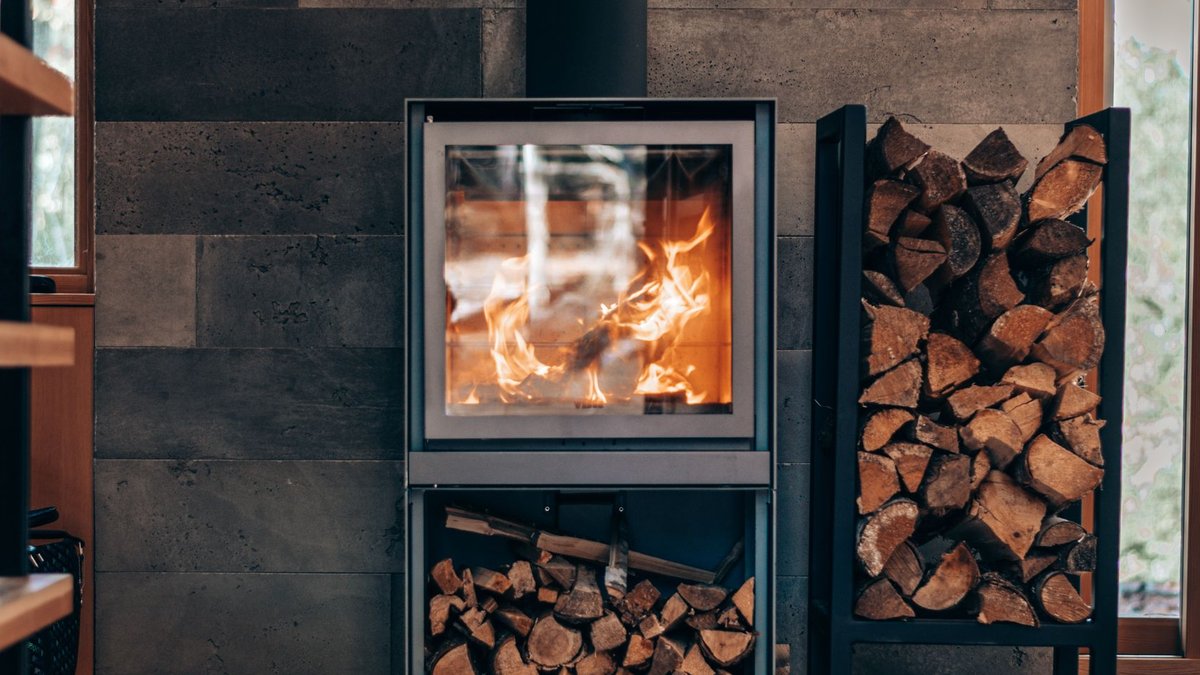
When it comes to choosing a stove or fireplace, several fuel types are available, including woodburners, pellet stoves, gas, electric, and bioethanol models. Each type has its own implications for installation, control, storage, ventilation, and day-to-day use.
Woodburning stoves remain a classic choice for those who want the radiant warmth and ritual of a real fire. However, they can be hands-on, and output can be harder to control, making them a key consideration in high-performance homes.
Woodburning Stoves and Alternatives
John Nightingale, managing director at Stoves Online, states that woodburning stoves are perfect for those who want to sit by a cosy hearth, but most people overlook the work involved with firewood, including stacking logs, laying the fire, and clearing it out. Ready to Burn logs, which have a less than 20% moisture content, can provide cleaner and easier combustion.
Heat logs or wood briquettes can be a useful alternative to traditional firewood, offering a cleaner, hotter, and longer burn. However, they require very dry storage, as damp can cause them to swell, crumble, and become difficult or unsuitable to burn.
Pellet Stoves and Multi-Fuel Options
Pellet stoves are a different proposition, offering a cleaner and more controlled burn than conventional log stoves. The fuel is made of compressed timber and must be used in dedicated pellet stoves. John Nightingale notes that pellet stoves have a fraction of the emissions of regular logs and burn so cleanly that you won’t see smoke from the chimney.
Multi-fuel stoves can provide more flexibility than dedicated woodburners, allowing users to burn logs or briquettes for a traditional wood fire, while also having the option of smokeless or manufactured solid fuels for a longer, steadier burn.
Gas, Electric, and Bioethanol Options
Gas stoves are suitable for homes where strong, highly controllable heat is desired without the need for storing solid fuel. Balanced flue versions are sealed from the room and draw combustion air directly from outside, making them easier to integrate into efficient modern homes.
Electric stoves are the simplest option for those who want quick, controllable heat without combustion, ash, fuel storage, or chimney sweeping. Peter Mintoft, managing director of Charlton & Jenrick, notes that there is a growing interest in electric stoves, especially where customers want simpler installation and greater flexibility.
Bioethanol stoves offer a real flame without a chimney or flue, giving owners more freedom over their placement in a room. The fuel is made from fermented plant-derived material, and burning it releases heat, water vapour, and carbon dioxide into the room, making ventilation a key consideration.