
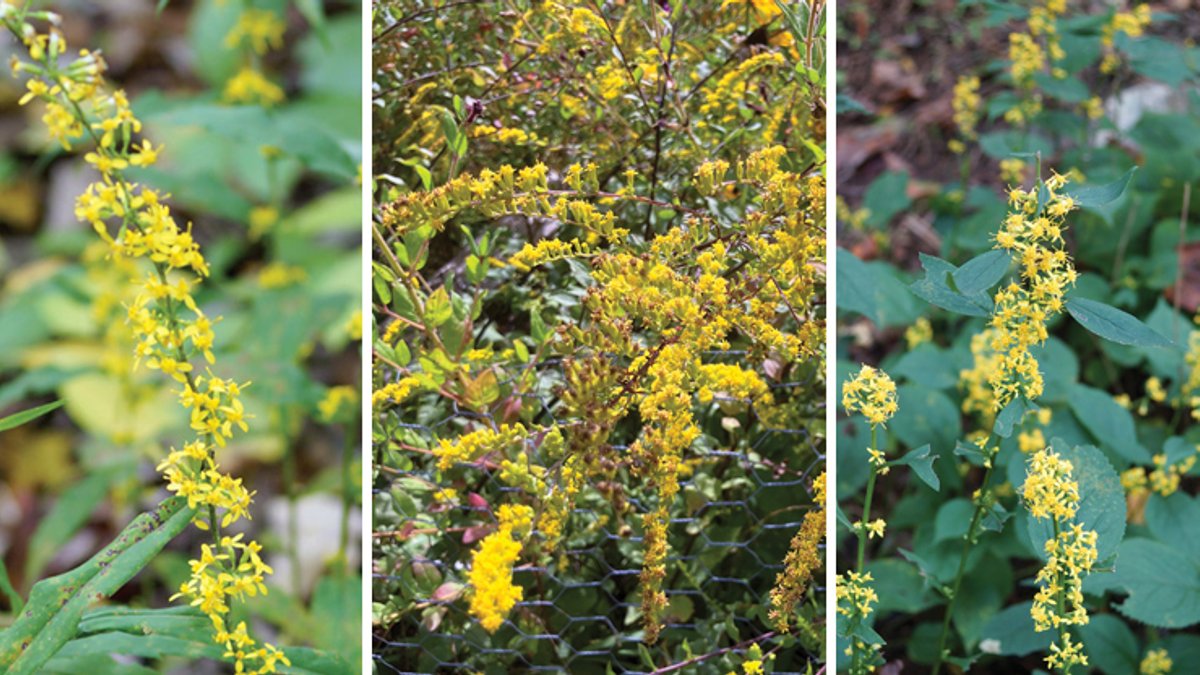
Goldenrod varieties have gained popularity among gardeners seeking late-season color, despite a long-standing reputation for causing allergies. The real allergen is usually ragweed, which blooms at the same time but has barely noticeable green flowers. Goldenrods possess showier blooms and carry pollen that is heavier and stickier, designed to move with insects rather than wind. This insect attraction creates a food source for a wide variety of bees, flies, and beetles, which in turn provides a feast for birds. The plants also serve butterflies by offering nectar as adults and foliage for larvae. Beyond their ecological value, goldenrods contribute bright color and attractive flower forms to the garden, and they make excellent cut flowers for arrangements.
Autumn Goldenrod for Late-Season Borders
Autumn goldenrod, hardy in USDA zones 4 through 9, offers two distinct options for the shade garden. The most common is the cultivar ‘Golden Fleece,’ a compact selection that reaches 18 to 24 inches tall. This version serves as an effective ground cover or edging plant, providing interest from late summer into early fall. The straight species is taller, typically reaching about 36 inches, with thinner, arching flower clusters and a finer texture. It suits both formal borders and naturalistic meadow plantings. Both versions can spread, but they do so politely; removing a few shoots around the edges keeps them contained. Gardeners often pair these plants with blue and purple companions, such as aromatic aster and ‘Iron Butterfly’ narrowleaf ironweed.
Blue-stemmed Goldenrod for Woodland Settings
Also known as wreath goldenrod, this species grows 2 to 3 feet tall and 1 to 2 feet wide, thriving in USDA zones 4 through 8. It prefers moist to dry, well-drained soil and partial shade, though it adapts to various growing conditions. The plant forms clumps rather than spreading aggressively, though it may self-sow. Its flowers appear in short clusters along the upper side of slender, arching stems during early to mid-fall, a time when few other plants bloom in shaded areas. This characteristic makes it a valuable addition to woodland gardens and shady pollinator plantings. It pairs well with white wood aster, blue wood aster, Christmas fern, and blue wood sedge.
While commercial growers are beginning to make more goldenrods available, the specialized niche market for native plant nurseries remains the primary source. As more gardeners are catching on to the charms of these valuable and versatile perennials, there’s no excuse for not growing at least one goldenrod in your garden.
Zigzag Goldenrod for Tough Shaded Spaces
This woodland species remains a quiet presence in the garden until it bursts into bloom in late summer or early fall. The stems are wavy, and the upper portion features tufts of bright yellow flowers that contrast with broad, toothed leaves. The plant is tough and adaptable, thriving in partial shade and somewhat moist soil. Because it is a moderate spreader, it works best in large gardens, under trees, or on shady slopes where other vegetation struggles.