
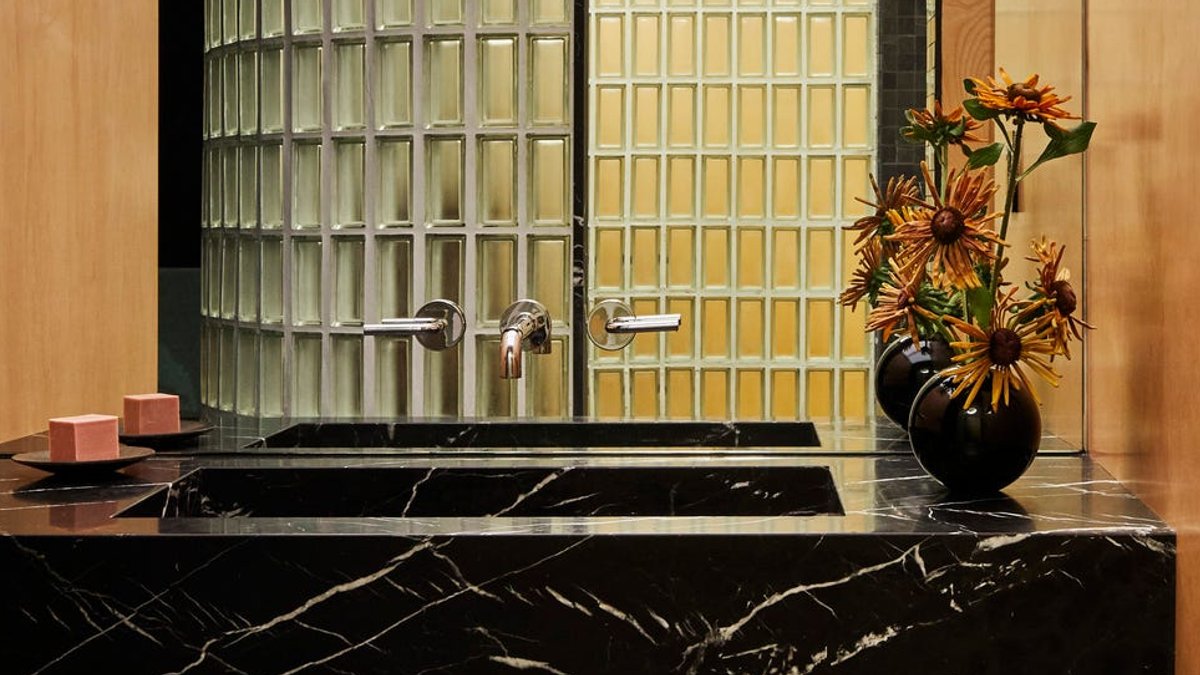
Bathroom renovations are adopting bold design choices, with four major trends emerging that transform everyday spaces into statements of style and functionality. From retro-inspired glass bricks to bold orange accents and natural wood textures, these trends reflect a shift toward both dramatic aesthetics and mindful simplicity.
Glass Bricks: A Transparent Revival
Originally popular in the 1930s and 1980s, glass bricks are experiencing a modern resurgence in bathroom design. Their porous, translucent quality allows light to filter through while maintaining privacy, creating a unique interplay of brightness and intimacy. New York-based designer Darren Jett of Jett Projects highlights this in a SoHo apartment wetroom featuring floor-to-ceiling glass bricks paired with a floating marble vanity and a mirrored wall.
The result is what Jett describes as a “voyeuristic bathing experience,” where light dances across surfaces. A standout example from Polish design studio Obiekty incorporates Trufle Mozaiki mosaic into glass brick partitions, adding artistic flair. Berlin’s Studio Karhard, known for the iconic nightclub Berghain, applies its industrial aesthetic to residential bathrooms using curved glass bricks that amplify natural light.
American studio Charlap Hyman Herrero takes the trend further by using amber-tinted glass bricks in a Silver Lake home, infusing the space with a warm, sunlit ambiance.
Monastic Minimalism: Simplicity as Serenity
Monastic minimalism merges brutalism’s rawness with high-end spa elegance, emphasizing clean lines and uncluttered spaces. The space, carved entirely from stone, transforms functional elements into sculptural features. Similarly, Studio Loes reimagines a Berlin apartment bathroom as a series of “moments of discovery,” with walls and fixtures seamlessly integrated into the marble structure. In London, Mosley Thorold’s Clerkenwell project uses Tadelakt plaster to create an atmospheric, almost spiritual shower niche.
Designers Kerstens draw from French coastal influences, pairing fossil-dotted muschelkalk limestone with textured walls to evoke natural tranquility. The trend prioritizes materials that speak to raw beauty over ornamentation, creating a sense of calm.
Juicy Orange: Boldness in Small Doses
Orange, particularly in its SunnyD-esque intensity, is making a surprising yet effective statement in modern bathrooms. Architect Caleb Mulvena of Studio Mapos balances bold orange tiles with stark white sanitaryware in a precise grid layout to ground the intensity. In London’s Grand Hotel Bellevue, designer Fabrizio Casiraghi pairs traditional British elements with an unexpected orange hue, complemented by black-tiled picture rails and a classic still-life painting. Persistent Objects Interiors takes the pairing further in a New York guest bathroom, where lavender grout divides crackle-finish tiles, harmonizing with orange accents.
The key to success lies in restraint: orange as a singular accent, paired with neutral or contrasting elements, creates energy without chaos. Even in South Korea’s Doldam House, designed by One Aftr, orange Palet tiles dominate while maintaining a cohesive aesthetic.
Burr Wood: Natural Texture Takes Center Stage
Burr wood, with its distinctive swirling grain patterns, is making a significant impact in bathroom design. Its organic texture contrasts beautifully with other materials, adding warmth and visual depth. In a Parisian home, architects Agathe Lavaud and Martin Massé combine stormy burr wood with travertine countertops, reflecting the timber’s pattern in a mirrored wall to enhance spatial perception.
The grain’s complexity is further explored in a Madrid apartment by Plutarco, where bespoke elm-root wood vanities marry Chinese marble and terrazzo flooring. The result is a celebration of natural materials that feel both luxurious and grounded. Polish firm One Aftr uses burr wood to create a full-height vanity in a Warsaw office, its mirrored backing expanding the room’s visual footprint.