
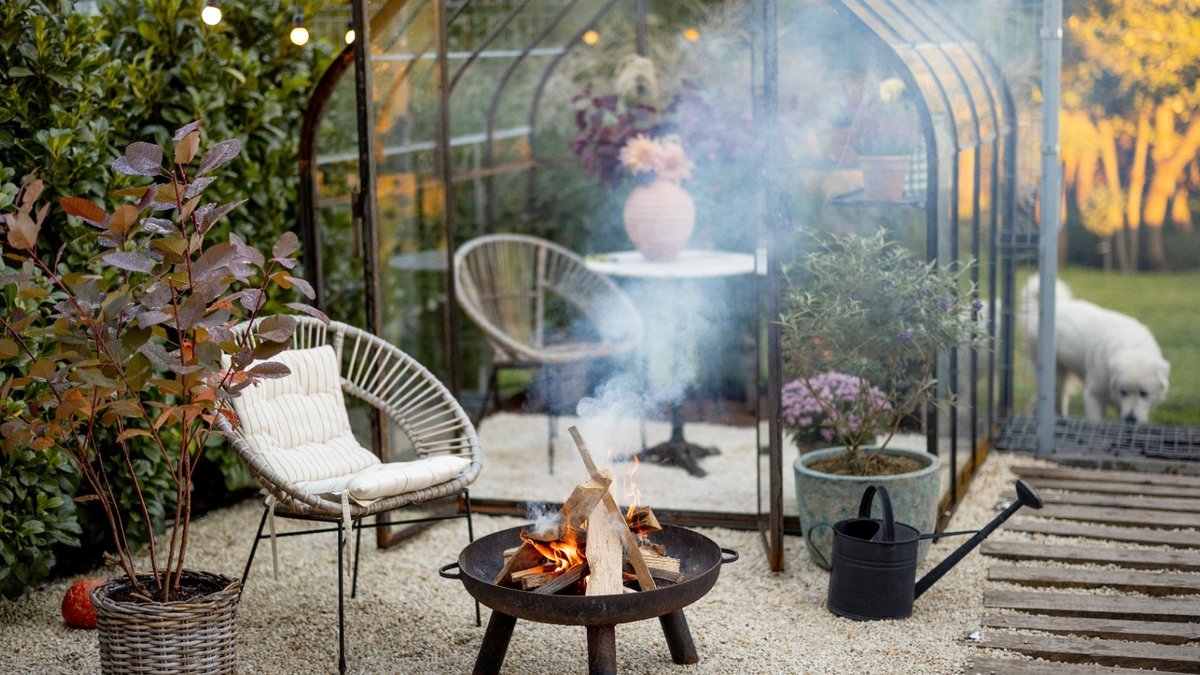
With Bonfire Night approaching, many gardeners are tempted to burn garden waste, but this can harm wildlife and waste valuable materials. Managing garden waste is an important November gardening job, and there are better ways to clear your garden without causing harm.
Composting soft prunings, shredding woody stems for mulch, and reusing fallen leaves can help reduce waste and protect wildlife. Every branch and leaf in your garden stores carbon, which is released into the air as CO2 when burned. Composting or mulching instead can return much of this carbon to the soil, feeding next year’s plants.
The smoke from bonfires also poses health risks. DEFRA’s outdoor burning guidance flags fine particles (PM2.5) from burning as a particular health concern, and warns that wet wood creates more pollution than dry. Autumn is when hedgehogs hunt for somewhere dry and sheltered to hibernate. A heap of leaves and branches is ideal: the British Hedgehog Preservation Society says bonfire piles look like ‘five-star hotels to a hedgehog’. They tend to burrow into the centre and the bottom two feet, exactly where the fire starts.
The 2018 State of Britain’s Hedgehogs report found the population had roughly halved since 2000. Gardeners can help attract hedgehogs to their gardens safely by creating an undisturbed corner with logs, leaves, or compost, or using a purpose-built house like this deluxe hedgehog house from CJ Wildlife. Ensure it’s in the quietest part of the garden so that the hedgehogs are undisturbed.
Garden bonfires are not illegal, but smoke that gets into a neighbor’s home or ruins their washing can be a statutory nuisance under the Environmental Protection Act 1990. Letting smoke drift across a road is an offense under the Highways Act 1980, and there is also the risk of fire spreading to fences and sheds.
Alternative Methods for Managing Garden Waste
Instead of burning garden waste, gardeners can use a garden incinerator, which burns hotter and cleaner than an open heap. An old metal wheelbarrow can also be used to contain the fire and reduce smoke. It’s essential to only burn dry material and never burn plastics, painted wood, or household rubbish.
A dead hedge is a bonfire pile reimagined as a feature, made by layering branches, twigs, and woody prunings between stakes. This creates a natural screen or boundary and becomes a home for hedgehogs, beetles, wrens, and toads. Soft prunings, spent bedding plants, and lawn clippings can be composted, and autumn leaves can be used to make leaf mold, a nutrient-rich mulch.
Using a leaf blower can make gathering leaves quick and easy, and shredding them helps them rot down sooner. Anything you can’t use at home can go in your council’s garden waste bin or taken to a local recycling center. By adopting these sustainable gardening practices, gardeners can reduce their environmental impact and create a haven for wildlife.
Creating a Dead Hedge
The dead hedge should be topped up every time you prune, as it settles as it rots. Chop or shred woody bits first, so they break down faster.
Autumn leaves are beautiful and bursting with soil-enriching goodness, and far too useful to burn. Rake them up, dampen them, and stuff them into leaf mold sacks or a simple chicken-wire cage. Leave them in a shady corner for a year or two, and you’ll have dark, crumbly mulch that seed-sowers and woodland plants love.