
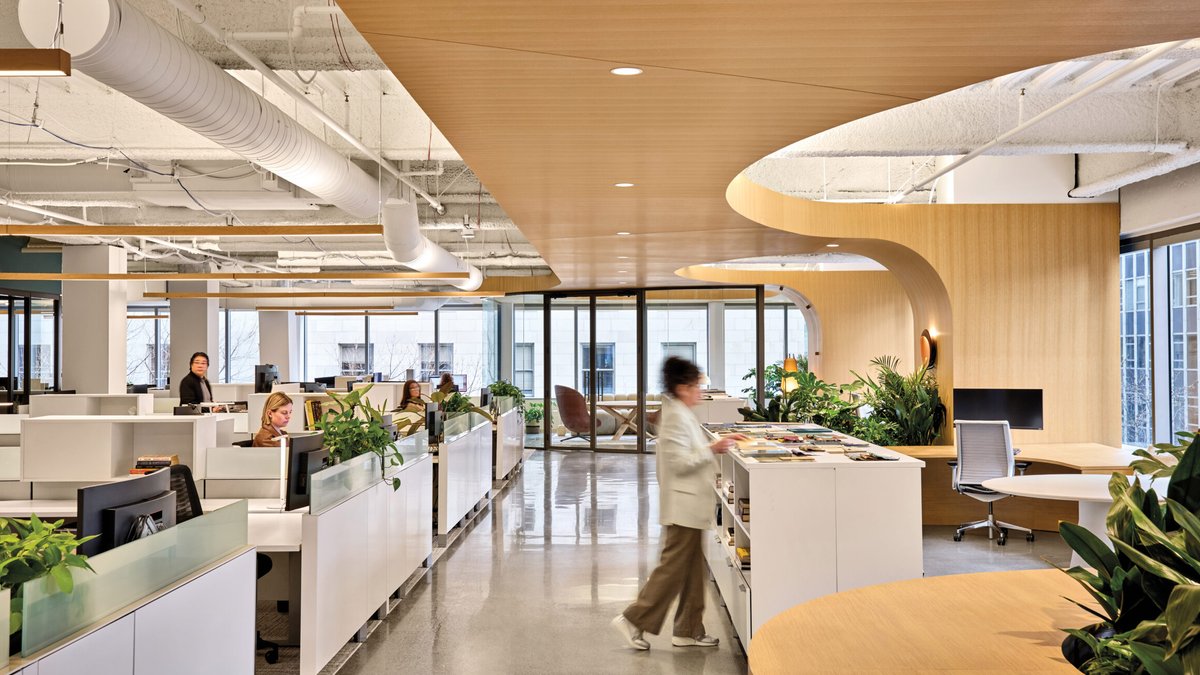
IA Interior Architects’ new Seattle office is a testing ground for a design framework that prioritizes harmony and well-being in the workplace. The office features a unique, 3D-printed banquette that runs the length of the space, incorporating different seating options and alcoves.
Designing for Harmony
The design is guided by IA’s Harmonic Principles, a framework that considers the senses and aims to create a human-centered workplace. “Our work can be very stressful,” says IA co-managing director Dave Kutsunai. “We’re trying to create a place that isn’t high energy to fuel the stress but does the opposite and counters it.”
The Harmonic Principles are informed by neuroscience and biophilic design, and they link wellness outcomes to performance and culture. The framework includes concepts like “positive affordances,” “sensory richness,” and “authentic purpose.” The office features a range of energetic zones, from noisy to quiet, giving employees choice in how and where they work.
Related: New Designs Boost Capabilities of 16 Releases
A Sustainable Approach
The 3D-printed banquette is made from biobased materials and is one of the largest applications of 3D-printed commercial furniture to date. It can be ground down and reprinted if the needs of the office change, making it a highly sustainable option. IA also reused 85 percent of the furniture from its previous Seattle office and incorporated demountable walls for breakout rooms.
“The curves and angles of the banquette would have been cost prohibitive with traditional construction,” says Kutsunai. “It was faster, less expensive, and regenerative.” The use of 3D printing and biobased materials reflects IA’s commitment to sustainability and circular design.
In a postoccupancy assessment, employees scored the new office better on all counts, with significant improvements in well-being, workplace attachment, and social atmosphere. The design has also been recognized for its innovative use of 3D printing and biobased materials, which reduces waste and minimizes environmental impact.
Circularity in Design
For IA, the Seattle office is a proving ground for the concept of circularity in design. The company believes that sustainability and agility are closely linked, and that circular design can help businesses respond to changing needs while minimizing waste. “Sustainability has always been a hard sell,” says Kutsunai. “Now, for the first time, the sustainable solution through circularity is the response to the primary business driver.”
Related: Carville Matalin home has quirky design twist
The 3D-printed banquette is a prime example of circular design in action. Made from a renewable bioresin, it can be easily recycled and reused, reducing the need for new materials and minimizing waste. The banquette’s design also reflects IA’s interest in creating spaces that are both functional and beautiful, with a soft walnut-wood tone and a curved, organic shape.
As businesses increasingly prioritize sustainability and agility, IA’s approach to design is likely to resonate with companies looking to create workplaces that are both productive and environmentally responsible.
IA’s use of 3D printing and biobased materials takes this concept to a new level.