
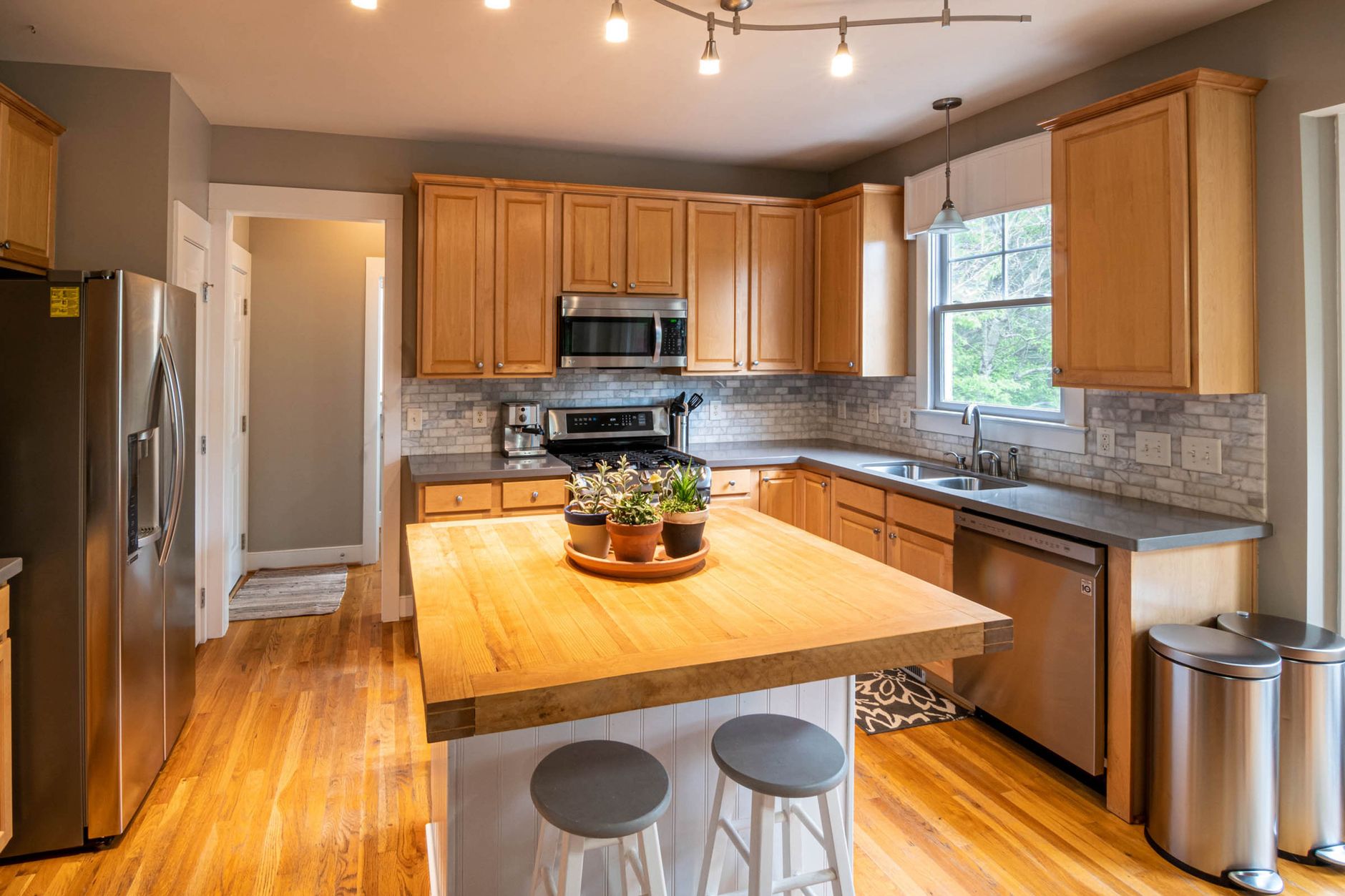
Over the past 18 years, renovation experts have watched countless kitchen trends emerge and fade. Yet one principle has remained constant: the most successful designs balance practical functionality with aesthetic appeal. For homeowners planning a renovation, understanding these core elements can make the difference between a space that dates quickly and one that endures.
The configuration of a kitchen shapes how people move through and use the space. A U-shaped layout, where cabinetry and appliances line three walls, creates an efficient work triangle while enclosing the cooking area. This approach works particularly well in homes where the kitchen connects to living spaces, as it prevents cooking activities from disrupting other household zones. The center of a U-shaped kitchen often becomes the natural spot for an island or breakfast bar, providing a surface for casual meals and food preparation without requiring additional square footage.
Open-plan arrangements have grown popular, but they demand careful consideration of traffic flow. Positioning the sink away from walkways and placing the stove near a wall rather than an island prevents collisions and safety hazards. These spatial decisions matter more than surface finishes when it comes to daily usability.
Benchtops endure daily wear, spills, and heat exposure, making material selection one of the most consequential decisions in any renovation. Natural stone options like Maximum Calacatta offer a bright, clean appearance that suits contemporary coastal homes. These materials resist staining when sealed properly and add value to a property, though they require periodic maintenance to preserve their appearance.
Stainless steel remains popular in both residential and commercial settings for good reason. It resists bacteria, handles heat without damage, and cleans easily. Pairing steel benchtops with textured elements—tiled splashbacks, timber details, or painted cabinetry—prevents the kitchen from feeling sterile. The contrast between sleek surfaces and tactile finishes creates visual interest while maintaining durability.
Timber brings warmth to kitchen spaces but demands more attention. Regular oiling, immediate cleanup of spills, and protection from excessive moisture extend its lifespan. Those who appreciate timber’s natural character often use it selectively—drawer fronts, open shelving, or accent pieces—rather than covering entire surfaces.
Related: Student Creates Designs for Human Connection
Bold color choices can define a kitchen’s personality. Mixing materials and hues allows homeowners to express individual taste rather than defaulting to neutral palettes. A single material, such as Breccia Pernice Marble, can introduce subtle color variations across splashbacks and counters. Complementary elements like contrasting tile or distinctive fixtures then tie these tones together.
The challenge lies in avoiding clashing without sacrificing personality. Restricting the palette to two or three complementary colors prevents visual chaos. Introducing a single unexpected element—a gold fixture, a brightly colored pendant light, or patterned tile—adds character without overwhelming the space.
Lighting transforms how a kitchen functions and feels. Pendant lights above islands or breakfast bars provide task illumination while serving as focal points. The Flowerpot VP7 Pendant, with its distinctive silhouette, demonstrates how lighting fixtures can become sculptural elements rather than afterthoughts.
Storage solutions shape daily life in the kitchen. Built-in timber drawers with integrated organizers keep utensils accessible without cluttering counters. Open shelving displays curated items while maintaining airflow around frequently used equipment. Some homeowners incorporate work-from-home nooks within kitchen spaces, using timber joinery to define zones without closing them off.
The smallest details—tapware finishes, handle shapes, switch plates—tie the overall design together. These elements often receive insufficient attention during planning but significantly impact how cohesive the finished kitchen appears.