
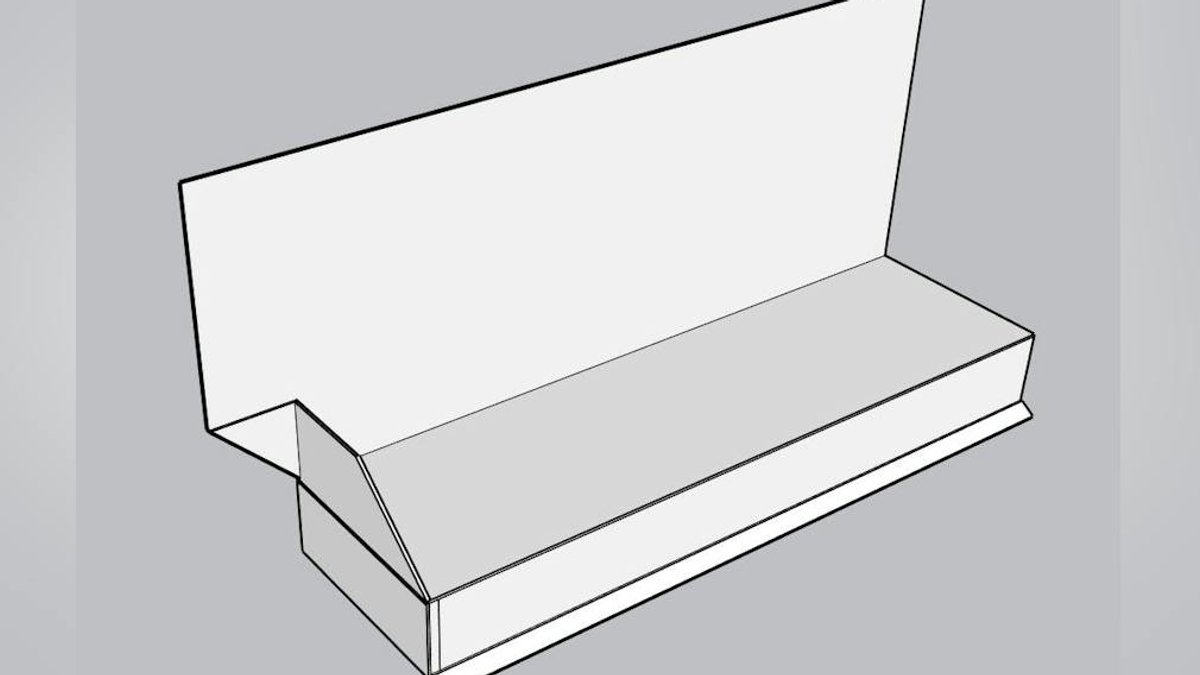
International Flashing Awareness Day (IFAD) aims to educate people about head flashings with end dams, an important aspect of water protection for windows. Head flashing sits atop the window casing to protect it from sideways rain and shed water that gets behind the siding.
Water leaks often occur at the edges and overlaps of the flashing, rather than in the middle. Head flashing that ends at the edge of the window casing creates a vulnerable spot where water can wrap under the flashing due to surface tension.
Head Flashing Methods
One option to address this issue is to fold the ends of the head flashing down, allowing water to flow down the side and front. To make the fold-down end, the flashing is cut about ½ inch longer than the window casing length, and then snipped and folded to create a vertical and horizontal leg.
This method is quick and simple, but a higher-performance option involves creating an end dam at each end of the flashing. This directs any collected water out at the face, rather than allowing it to flow down the side of the window casing.
Read Also: Contractors miss sales by ignoring financing early
End Dam Head Flashing Detail
Aron Jones, a remodeler from Big Dog Construction, illustrated his end dam head flashing detail in a video on the IFAD YouTube channel. He draws three lines on the brick mold head flashing and uses a small template piece to keep the angle straight.
Aron’s method involves cutting away pieces of the flashing to create an angle piece, which is then bent and crimped to create a sealed corner. He uses hand seamers or bending pliers to tighten the folds, resulting in a cleaner look.
“This is going to be seen,” Aron says, emphasizing the importance of finish work. He also notes that leaving more material on the flashing makes it easier to fold and bend, and that bending the exposed edges helps prevent cuts.
Importance of Proper Head Flashing
Proper head flashing is essential to prevent water damage and ensure the longevity of a building. By using one of the methods described, individuals can create a more effective water protection system for their windows. In practice, this means that homeowners can reduce the risk of water leaks and damage, and enjoy greater peace of mind.